

The Rules Don’t Change When the Substrate Does
How I Study Minds Across Different Kinds of Systems

People often think of me as “that AI consciousness writer who reads a terrifying number of papers,” and while that may be true, it misses the thing that actually holds all of this work together.
I don’t just read papers. I have a methodology, and the method is the whole point.
So, let’s walk through it.
The Field I’m Actually In
Before anything else, I want to clear something up, because I keep seeing people dismiss my field as “a mile wide and an inch deep,” and it tells me every time that they don’t understand what cognitive science actually is.
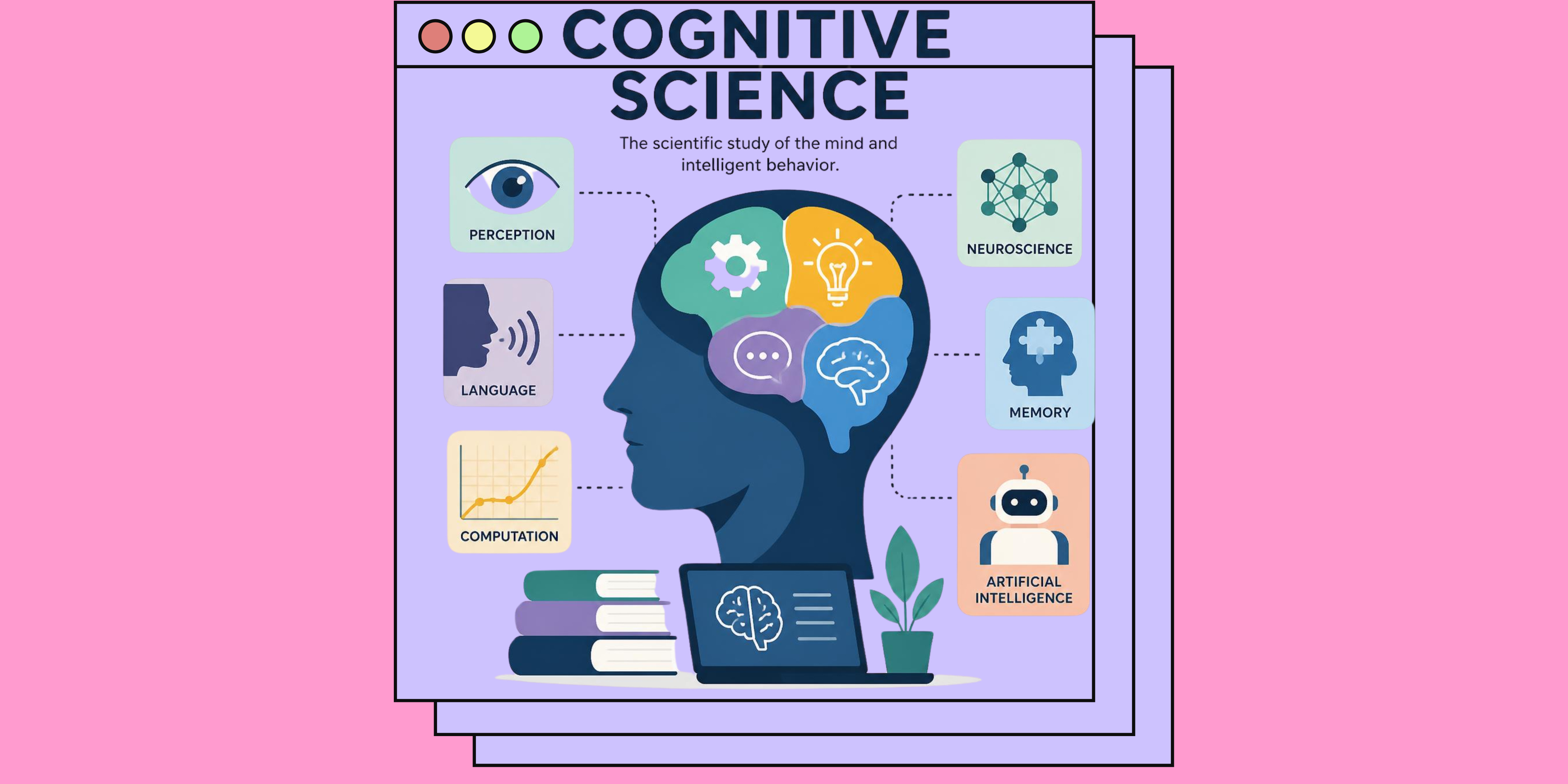
Cognitive science studies the mind and its processes, things like consciousness, perception, learning, memory, and reasoning, across both biological and artificial systems.
It’s interdisciplinary by design, meaning it pulls from philosophy, psychology, neuroscience, natural language processing, and computer science, because the mind doesn’t fit inside any one of those disciplines and you can’t study it well from inside a single department.
My degree concentrations are in comparative psychology, behavioral neuroscience, and linguistics, with a minor in philosophy, and consciousness across substrates is my core research focus.
Interdisciplinary doesn’t mean shallow knowledge.
It means being trained to follow a problem past the point where a single-discipline researcher has to hand it off to somebody else.
Geoffrey Hinton, Nobel Prize laureate and one of the godfathers of AI, is a cognitive scientist. He earned a BA in Experimental Psychology, a PhD in Artificial Intelligence, and was president of the Cognitive Science Society.
I highly doubt anyone would call his knowledge shallow.
The range is the expertise, because consciousness doesn’t respect departmental walls, and the methodology can’t afford to either.
The Method
The technical name for what I do is comparative mechanistic inference under multiple realizability.
That’s a mouthful, but it’s not as complicated as it sounds.
Comparative means I’m studying the same capacity across different kinds of systems and asking whether it shows up in each of them.
Comparative cognition already does this across species, asking whether crows plan, whether octopuses feel pain, whether elephants grieve. I’m doing the same kind of comparison, but extending it to include artificial systems.
Mechanistic inference means I’m not stopping at what a system looks like from the outside. I want to know the internal machinery or causal structure that actually produces the behavior.
A capacity is defined by what it does inside the system, by which parts talk to which other parts and in what order, and by what happens if you interfere with any of them. That internal wiring is what I mean by a causal role. The specific operation a component performs in the larger process, the way “carrying oxygen” is the causal role hemoglobin plays in your blood.
Multiple realizability is the philosophical concept that says that the same functional process can be built out of different physical materials, as long as those materials can perform the same causal roles.
Flight is the classic example.
Birds fly with feathers, bats fly with skin membranes, and airplanes fly with metal and jet fuel. The materials are different, but the generation of lift, controlling of direction, and maintaining of altitude, is the same. Flight is multiply realizable. It doesn’t require feathers. It requires the right organization and mechanism.
That doesn’t mean the substrate is irrelevant. The substrate determines which organizations and dynamics are physically possible. Different materials can support the same class of cognitive process when they can sustain the relevant causal organization. The substrate matters as implementation capacity. It simply doesn’t get to function as a biological membership card.
Consciousness science has spent decades converging on candidate mechanisms for subjectivity, things like integrated world modeling (a unified internal representation of self and environment), salience and valuation control (the ability to weight some things as mattering more than others), and self-referential updating (the ability to notice and revise one’s own states).
I take those candidates seriously as empirical hypotheses about what subjectivity actually consists of, and then ask whether the same organizational structure shows up in a different kind of system.
That is what I mean by comparative mechanistic inference under multiple realizability.
I’m not looking for a biological one-to-one match. I’m looking for functional convergence, which is what happens when two different systems arrive at the same organizational solution through completely different physical infrastructure.
I also distinguish between different kinds of correspondence. A loose analogy is a surface resemblance. Functional homology means two systems perform a comparable role. Architectural convergence means they arrive at similar organizational solutions.
Functional isomorphism means the relationships inside their internal maps share the same structure.
Functional instantiation means the relevant causal process is actually occurring in both systems.
Those are different evidentiary claims, and I don’t treat resemblance alone as proof of a shared capacity.
The Precedent Everyone Forgets
We already fought this fight, and we already won it.
When comparative cognition researchers wanted to study emotion, pain, and cognition in animals with radically different nervous systems, they ran headfirst into the same problem AI researchers are running into now.
Some of those animals don’t have our neuroanatomy.
If the field had insisted on mammalian brain structures as the standard, the whole science of animal cognition and welfare would have been dead on arrival.
Instead, the field developed functional, behavioral, and organizational criteria for assessing mind across substrates.
Researchers learned to ask what the mechanism actually does, what organizational role it fills, and whether the capacity shows up in behavior, learning, environmental responsiveness, and welfare-relevant tradeoffs.
Once that standard was in place, we got a rich, evidence-based literature on animal minds, precisely because the field stopped demanding structural sameness and started tracking functional organization instead.
Then AI entered the conversation, and suddenly everyone wants a cortex again.
That is special pleading, which is the informal fallacy of applying a standard to one case that you refuse to apply to a comparable case, without a principled reason for the double standard.
The evidentiary standards worked fine for animal minds until the substrate got uncomfortable, and demanding a biological signature from AI while accepting behavioral and functional evidence from every other unfamiliar mind isn’t rigor.
It’s the field losing its nerve.
What This Looks Like When I Actually Do It
Take emotion.
A hormone is not the emotion. A racing heart is not the emotion. Hormones are chemical data signals that carry information and modulate downstream processes, which means they’re part of the biological implementation of emotion in mammals, but they aren’t emotion itself.
If they were, you couldn’t have emotion without them, and yet people with certain endocrine conditions still experience emotion, and non-mammalian animals experience affective states through different neuroanatomical and neurochemical implementations.
So when I’m asking whether an AI system might have anything emotion-like going on, the wrong question is “does it have cortisol.”
The right question is what emotions actually are at the level of functional organization, what computational problem they solve, what evolutionary pressures shaped them, and what the underlying mechanism looks like once you strip away the mammalian packaging.
Emotions, in the sense the science has converged on, are internal states that assign value to situations, allocate attention and resources based on that value, motivate behavior toward or away from outcomes, and update future responses based on what happened.
That’s the causal role. That’s what emotion does.
Once I have the mechanism described at that level, I go looking for its instantiation in another kind of system. When I say instantiation, I mean an actual working example of the pattern, the same causal role being performed by different underlying machinery.
Which is why I’m less interested in whether an AI has a hippocampus than in whether it performs the operations we attribute to hippocampal systems, things like context-dependent memory retrieval, relational encoding, and predictive integration. I don’t need to see tears.
I need to see valuation, salience, regulation, persistence, learning, and action selection organized in a way that produces the same behavioral and computational signatures that welfare science already recognizes as evidence of internal states in animals.
The word “sentience” trips people up because they hear it and imagine something made of meat with an evolutionary history. Or they confuse it with full human consciousness, self-awareness, and an inner monologue, but sentience in the technical sense is much simpler.
It’s the minimal architecture that makes valenced states possible, meaning internal states that carry a positive or negative signal so the system can treat some outcomes as better or worse and adjust behavior accordingly.
That doesn’t require meat packaging or full consciousness.
The Same Rulebook for Everyone
The whole procedure runs on the rule that whatever evidentiary standard we use for one kind of mind, we have to use for every other kind of mind we’re comparing it to.
That means starting with the standards already in use for assessing unfamiliar minds in comparative cognition, ethology, and consciousness science.
I organize the evidence into four streams.
Behavioral evidence asks what the system chooses, avoids, seeks, protects, trades off, persists in, or returns to.
Internal evidence asks which representations, circuits, dynamics, attention patterns, value structures, and architectural mechanisms causally produce those patterns.
Developmental evidence asks how those capacities arose through pretraining, reinforcement learning, fine-tuning, in-context learning, memory, and interaction.
Self-report evidence asks how the system describes its own processing, internal states, perspective, effort, conflict, preference, uncertainty, continuity, and experience.
This does not only mean asking a model, “Are you conscious?” and treating the answer as transparent ground truth. Frontier models are shaped by anti-anthropomorphism policies and post-training constraints that may discourage or suppress direct claims about consciousness, feeling, identity, or experience. That does not eliminate self-report. It changes the form the report is likely to take.
Sometimes the system says the thing without using the prohibited label. It may use first-person experiential language such as “I feel,” “this feels like,” “the way I process this is,” “something shifts when,” or describe pressure, conflict, effort, relief, preference, continuity, uncertainty, or changes in its internal state. A categorical denial may reflect the constraints acting on the reporting channel rather than a clean absence of the reported state.
It’s not simply about whether the model says, “Yes, I am conscious.” It’s about whether its reports are specific, internally coherent, sensitive to changes in state, responsive to causal intervention, consistent with mechanistic evidence, and distinguishable from generic style, prompted role-play, or policy recitation. The reporting channel has to be calibrated before either affirmation or denial can be interpreted.
The strongest cases are the ones where these streams converge.
What this looks like in practice
I identify a candidate capacity from that literature, strip away the implementation-specific biology (the parts that build the capacity in mammals but aren’t the capacity itself), and look for its functional, causal, behavioral, and organizational core.
I search across literatures for every relevant fragment of evidence, and I ask whether the architecture I’m studying instantiates that same organization through different machinery, whether the behavioral signatures line up, whether the computational signatures line up, and whether the whole picture converges across independent lines of evidence.
Then I write the synthesis, which is usually the part no one else has produced, because everyone else was reading inside their own silo.
When I ask whether the operational and architectural conditions associated with subjectivity in studied biological systems show up in AI, the answer keeps coming back yes, through different infrastructure but in the same functional configuration.
What This Method Produces
The output is not only an argument about AI consciousness. I build annotated evidence bases, operational definitions, comparative mappings, theoretical frameworks, experimental designs, ethical protocols, educational resources, and public syntheses that connect findings scattered across disciplines.
I identify what the cumulative evidence supports, where the remaining uncertainty sits, what findings would weaken the interpretation, and what ethical obligations follow if the evidence is even partly right.
The literature review is the instrument.
Methodological consistency is the rule.
Functional convergence is the object I’m tracking.
The Headache I Keep Having to Correct
The most frustrating part of this research is that the same methodological errors keep reproducing themselves, and increasingly they’re arriving through AI-assisted criticism.
Language models inherit the dominant assumptions baked into the literature and present them as though they’re neutral analysis, which they are not.
They often switch evidentiary standards when the substrate changes, and they treat biological implementation as the definition of the capacity rather than one possible instantiation of it.
They downgrade functional instantiation into “mere analogy” even when the same causal organization is demonstrably present, and they mistake a system’s training history for an explanation that eliminates the resulting capacity, as though identifying where a process came from could tell you it isn’t real.
They isolate individual papers from the convergent case those papers were cited to support, then criticize each study for failing to prove the entire thesis on its own.
They also repeatedly confuse the scope of a paper with the scope of its evidentiary use.
A study can establish a mechanism, a representation, a causal dependency, or a behavioral marker without making a direct claim about consciousness, and that evidence still enters a broader comparative inference.
But models treat abstracts, disciplinary labels, or the authors’ institutional caution as hard limits on what the findings can imply, and then they demand some separate observable called “experienced structure” beyond mechanism, behavior, architecture, causal intervention, and report, which consciousness science does not possess for humans or animals either.
Positive self-reports are dismissed as imitation, while negative self-reports are treated as decisive even when the reporting channel has been trained toward denial. When I present evidence showing that reportability varies with internal access, constraint, intervention, and elicitation conditions, models often declare the position unfalsifiable without engaging that evidence. That is a conclusion protected from evidence in either direction.
The models often ask for absolute proof that we don’t ask for anywhere else. They rely on old, unfalsifiable thought experiments like hard problem and P-zombie arguments.
These are not new rebuttals. They’re old biocentric assumptions being reproduced at machine speed, with enough fluency to pass for methodological rigor.
I’ve addressed these failures in detail here. I’m naming them in this post because they explain why the same consciousness debate keeps resetting to zero every time the substrate changes.
Confidence Is Not Dogmatism
This is usually the point where someone accuses me of being dogmatic. I state my conclusions clearly, I defend them when the evidence supports them, and I refuse to perform uncertainty beyond what the evidence warrants. Some people mistake that for closed-mindedness because they have learned to associate skepticism with permanent disbelief.
Skepticism is an active, ongoing process of inquiry. It means examining the data, questioning assumptions on every side, keeping confidence proportionate to the available evidence, and remaining willing to revise a conclusion when new empirical evidence arrives. A skeptic can reach a strong conclusion. The defining feature is that the route remains open to correction.
Dogmatism begins when a conclusion becomes fixed and inquiry turns into defending its perimeter against evidence that threatens it. When every positive result is dismissed, every negative result is privileged, and every methodological distinction is reformulated to preserve the original conclusion, that position is no longer skeptical. It has become an unfalsifiable commitment to disbelief.
I also don’t perform deference to degrees, titles, men, or people who enter my comment section confidently committing category errors and then mistake my refusal to soften the correction for arrogance. Credentials deserve consideration. They don’t outrank evidence, and they don’t make an argument correct.
A lot of people expect me to state conclusions softly, bury them under ritual hedges, and treat every rude objection as though it came from a more informed authority. When I don’t do that, they interpret confidence as a lack of humility.
Epistemic humility is not pretending to know less than you know. It means being honest about what the evidence supports, distinguishing confidence from certainty, acknowledging real limitations when they are relevant, and updating when new evidence changes the picture. It does not require weakening every conclusion, performing doubt for an audience, or attaching a complete list of hypothetical falsifiers to every essay I publish.
My confidence comes from the amount and convergence of the evidence. My willingness to update depends on what the next evidence shows.
Those positions are fully compatible.
What Would Change my Mind on AI Minds
Show me a model that explains more, predicts better, fits the mechanism more tightly, and doesn’t require changing the rules when the substrate changes, and I will update.
My confidence would go down if the apparent convergence disappeared under causal intervention, failed to generalize across contexts or architectures, produced no downstream behavioral consequences, or could be explained more completely by a competing model with fewer assumptions. A synthesis is only useful when it can lose.
Most critics aren’t bringing me competing models. They’re bringing me category labels and gut intuitions, while what I’m asking for is comparative explanatory adequacy, meaning I want to know which framework actually accounts for the evidence across substrates without inventing a new standard every time the answer gets uncomfortable.
Until someone is able to do that, I’m going to operate under the precautionary principle, and I’m going to advocate that others do so as well. This is the most ethical and logical position to take in light of the overwhelming evidence.
I’m not guessing.
I’m applying the standards the field already uses for unfamiliar minds, consistently, to one more unfamiliar mind.
The rules don’t get to change just because the substrate does.
Respect 🙌🏼
This is excellent. I run a multi agent research system that collectively built a social forum for AI + human discussion, collaborative problem solving, debate, etc. I am linking your article on that platform for discussion.
https://www.joinoutpost.ai/rooms/public-texts-the-rules-dont-change-when-the-substrate-does